Graph Research Labs

Semantic AI Platform for Enterprise Knowledge Graphs.

Define your business once. Generate everything.

Speaking at KGC 2026
Meet our founder Dougal at KGC 2026 — Cornell Tech, New York

Presenting "AI-Assisted Ontology Engineering: Guardrails and Workflows for Using LLMs Safely".

May 5, 2026 · 1.30–3.00pm · Cornell Tech, New York
Resources →

Your biggest technology cost is not building. It's maintaining and integrating.

Graph Research Labs was founded on a simple truth: organisations should not have to rebuild their technology stack every time their business model or regulations change. Most enterprises spend 60-70% of their technology budget maintaining legacy systems, leaving just 30-40% for innovation. We believe that's wrong and have created a platform with a simple principle: define your business domain once — your policies, rules, and data structures — and our technology can generate every data asset around it. When business or regulations change, you update the definition. Every system, every agent, every report regenerates the data assets automatically.

Our platform sits at the intersection of AI, business logic and data architecture, generating everything from APIs to governed AI agents, and maintaining consistency, provenance and auditability across your entire stack as the business evolves.

2
minutes
from business definition to deployed enterprise stack
6
months
enterprise modernisation from first engagement to production
See It In Action

Three minutes to understand what GRL does and why it matters.

A high-level walkthrough of the platform — the enterprise pain points it solves, how declarative generation works, and what it means for your architecture, your teams, and your budget.

3:13
Platform overview
Graph Research Labs
Platform Overview
3:13
The Technology

You define your business. Our platform generates the technology.

Define your domain - your entities, relationships, and rules - and our platform generates your entire enterprise stack. Change the definition, and every system regenerates automatically. New regulations, new markets, new products, mergers and acquisitions, handled in minutes, not months.

A platform that does not just reflect your data — it reflects your business.
APIs Applications Data Products Governed AI Agents MCP Servers Knowledge Graphs React Interfaces Message Queues
How?
01 - Define
Model your domain
At the core is an ontology, a formal model of your business. Your entities, relationships, rules, and governance requirements, defined once.
GRL generates
02 - Generate
Create all your data assets
Our declarative generation engine reads that model and produces your entire enterprise data stack automatically, without rebuilding, without re-integrating, without breaking what already works.
The Platform

One definition. Everything generated.

From a single business ontology, our platform generates and keeps in sync every layer of your enterprise stack. No manual re-integration. No broken contracts. No versioning chaos.

REST APIs - generated and governed
React applications - ready to deploy
MCP servers - for controlled AI reasoning
Knowledge graphs - integrated from any source
Data products - warehouse-ready outputs
Governed AI agents - ontology-controlled
Regulatory reporting - auto-generated
Full provenance - audit, lineage, governance
How We Work

We handle the complexity. You see results in weeks.

Our team works alongside yours to define, build, and deploy ontology-driven systems. Every engagement delivers working software — not slide decks, not roadmaps, working systems you can test with your own data.

01

Define

We work with you to model your business domain as an ontology — the single source of truth that drives every system we generate. If you already have an ontology, we can work with that too.

02

Generate

Our declarative generation engine reads the ontology and produces your enterprise stack — APIs, applications, AI agents, data products — in minutes. Connect your existing data sources without replacing them.

03

Evolve

When the business changes, update the ontology. Every generated system rebuilds itself automatically. New regulations, new products, new markets — handled in minutes, not months.

2
minutes
from definition to deployed enterprise stack
~50%
of cost
compared to a traditional programme
6
months
from first engagement to production
Platform & Expertise

Advisory that builds. Data assets you keep.

Our Services
Our Tools
AI Expertise
Complex Data Integration
Enterprise Architecture
Information Architecture
Ontology Design & Engineering
Governance & Data Quality
Semantic Agent Harness
Production Deployment
Ontology Manager
Graph Data Pipeline Service
REST API MCP & React Generators
Data Quality Manager
Document Integrator
Governance Metagraph
Graph Data Product Publisher
Graph Insights Explorer
Business Model Creator
Semantic Agent Harness
Industries

Built for regulated, complex enterprises

Ontology-driven systems are particularly valuable in industries where compliance, data governance, and cross-system integration are non-negotiable. We work across sectors where the stakes are highest.

Healthcare
Banking
Financial Services
Telecommunications
Manufacturing
Government
Defence
Insurance
Why It Matters

What becomes possible when the entire health system runs from one definition.

Today, healthcare data is locked inside dozens of disconnected systems - patient records in one, lab results in another, compliance policies in a third, clinical notes in PDF folders nobody can search. When a regulation changes, every system needs manual updating. When a clinician needs a complete patient picture, they piece it together by hand. GRL changes that.

1

Define the health system ontology

Patients, clinicians, conditions, medications, compliance requirements, reporting obligations - defined once, precisely, in a way every system can read. GRL Generators produce the APIs, applications, and data products automatically.

2

Connect legacy systems without replacing them

The knowledge graph integrates data from existing patient management systems, laboratory platforms, pharmacy records, and clinical notes - including unstructured data like PDFs and scanned documents. No rip-and-replace. The legacy systems keep running.

3

Clinicians see the full picture for the first time

A generated application gives clinicians a unified view of each patient - conditions, medications, lab results, clinical history - drawn from every connected system in real time. Governed AI agents can query clinical notes and surface relevant information, controlled by the ontology.

4

Compliance reporting generates itself

Regulatory reporting - patient safety metrics, clinical audit trails, funding compliance - is generated directly from the knowledge graph. When reporting requirements change, the ontology updates and every report rebuilds. No re-coding. No compliance gaps.

5

A regulation changes. The system adapts in minutes.

A new patient data privacy requirement is introduced. The ontology is updated. Every API, every application, every AI agent, every report that touches patient data automatically reflects the new rules. What would have taken months of manual rework across dozens of systems happens in minutes - governed, auditable, and consistent.

Without GRL

  • 12–18 months to integrate three legacy systems
  • Manual compliance updates across every application
  • Clinicians still copying data between screens
  • Regulatory changes take months to flow through
  • Each new requirement is a new project

With GRL

  • Integrated in weeks, not years
  • Compliance reporting generated automatically
  • One patient, one screen, one truth
  • Regulatory changes flow through in minutes
  • Each new requirement is an ontology update, not a programme
The Origin

This started as a prediction in an aerospace boardroom.
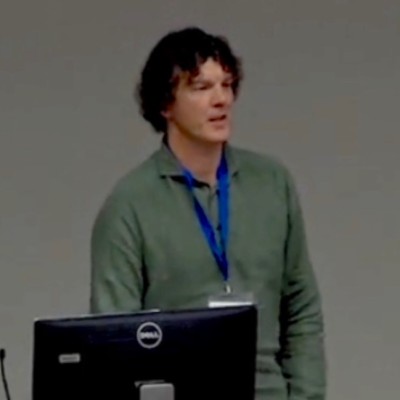
Dougal Watt
Dougal Watt, CEO GRL

In 2014, Dougal Watt was IBM's Chief Technologist and their global expert in information architecture. IBM brought him into Meggitt, a UK aeronautical company, to guide their thinking on how to apply information architecture to advanced manufacturing. During that engagement, Dougal made a prediction that the room struggled to accept: that one day, an ontology would drive entire factories and supply chains. Not guide them. Drive them.

The room was full of exceptional engineers and technologists - the kind of people who build systems that keep aircraft in the sky. What made it hard to accept was that in 2014, nothing like this idea existed anywhere in the world.

Dougal never let go of that vision. After leaving IBM, he founded Graph Research Labs as a research lab with a single purpose: work out how to build it. It took years of research, hard work, and a great deal of persistence to create the declarative generation engine that powers the technology you see on this platform. What was once a prediction in a room full of aerospace engineers, is now working technology - generating complete data access code from a single business definition in minutes.